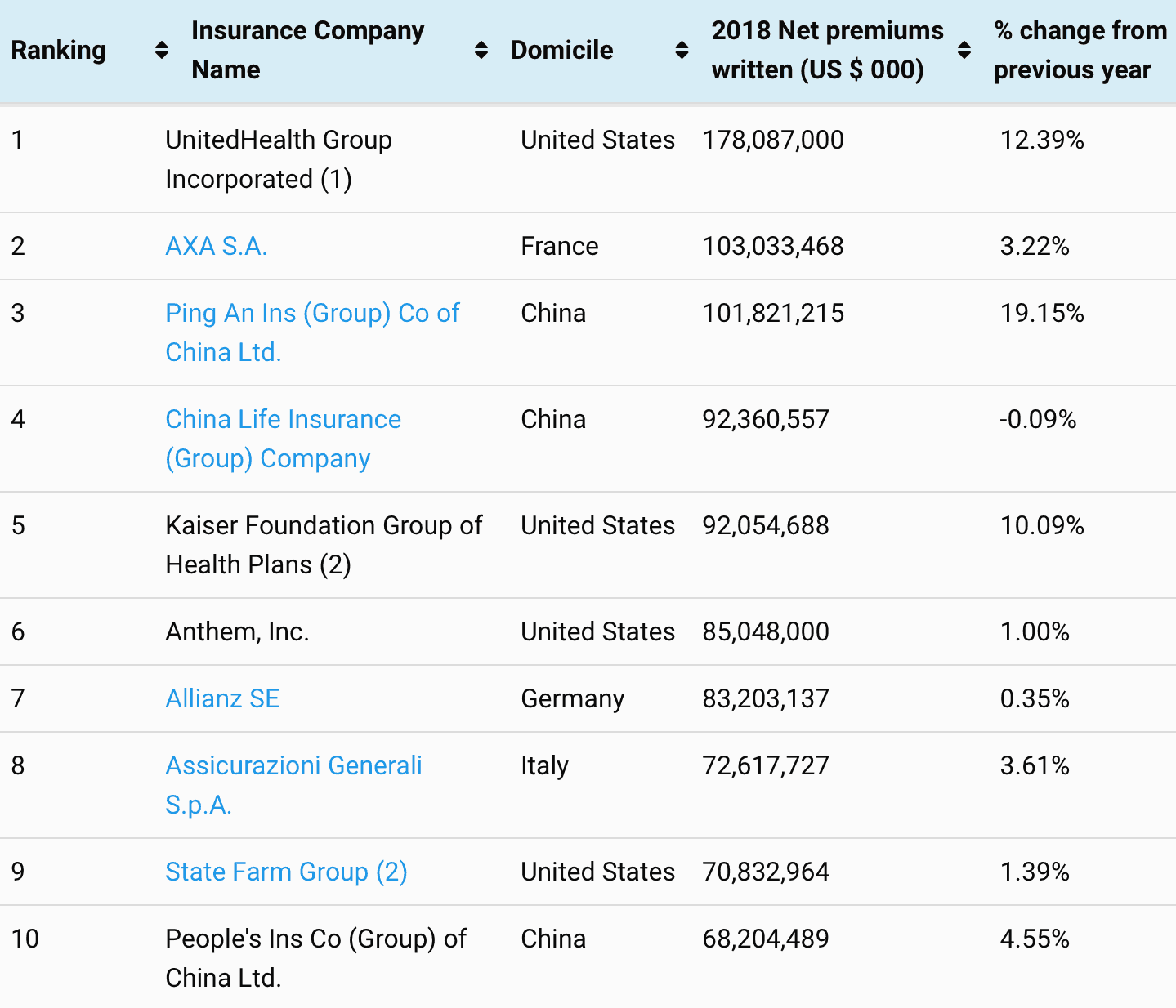
Who is the top three insurance company in the world is a question that matters more than most people realize. Whether you’re a policyholder, an investor, or just someone trying to understand where the biggest financial safety nets on the planet actually come from, knowing which companies sit at the top tells you a lot about how global risk is managed, priced, and distributed across billions of lives and assets.
The answer points to giants like Berkshire Hathaway, Ping An Insurance, and Allianz SE — three companies that didn’t just get big by accident. They built their dominance through decades of smart underwriting, aggressive global expansion, and product portfolios that cover everything from individual life policies to massive corporate reinsurance deals.




Together, they represent trillions in assets and serve customers across nearly every continent on earth.
Overview of the Top Three Insurance Companies in the World
Did you know the global insurance industry is worth over $6 trillion in annual premiums? That’s not a typo. And a handful of companies control a massive chunk of that number.
So what separates a top-tier insurance giant from the rest? It comes down to three core metrics: market capitalization, total revenue, and policyholder base. The companies sitting at the top don’t just sell policies — they manage enormous investment portfolios, operate across dozens of countries, and serve hundreds of millions of customers.
BUT not every big insurer earns the top spot. You need scale, trust, and financial muscle all at once.
The Three Giants That Dominate Global Insurance
Here is the deal — when analysts rank the world’s top insurance companies, three names consistently rise to the top: Berkshire Hathaway, Ping An Insurance, and UnitedHealth Group. Each one built its empire differently, but all three share one thing: an almost unshakeable grip on their respective markets.
Berkshire Hathawaywas founded in 1839 as a textile company — yes, textiles. Warren Buffett transformed it into a financial powerhouse after acquiring it in 1965. Headquartered in Omaha, Nebraska, its insurance arm includes GEICO and General Re, covering everything from auto to reinsurance.
Its core strength? Using insurance float to fund massive investments.
Ping An Insurancewas founded in 1988 in Shenzhen, China. It grew from a small regional insurer into one of the most valuable financial services companies on the planet. Today, Ping An operates across life insurance, property insurance, banking, and fintech — making it a true financial ecosystem, not just an insurer.
UnitedHealth Groupwas founded in 1977 in Minnetonka, Minnesota. It dominates the health insurance segmentin the United States and has expanded aggressively into healthcare services through its Optum division. With over 150 million people served globally, its policyholder base is staggering.
| Company Name | Country of Origin | Year Founded | Primary Insurance Type |
|---|---|---|---|
| Berkshire Hathaway | United States | 1839 | Property, Casualty & Reinsurance |
| Ping An Insurance | China | 1988 | Life, Property & Financial Services |
| UnitedHealth Group | United States | 1977 | Health Insurance & Healthcare Services |
Pro Tip:When evaluating insurance giants, don’t just look at revenue. Look at insurance float— the premiums collected before claims are paid. Berkshire Hathaway uses this float to generate billions in investment returns. That’s the real secret weapon of the world’s top insurers.
What makes these three companies truly elite is their ability to diversify beyond traditional insurance. They’ve each built ecosystems — investments, healthcare, fintech — that make them nearly recession-proof. You won’t find that kind of resilience in your average regional insurer.
Financial Performance and Market Position
Did you know the world’s top three insurance companies collectively manage over $2.5 trillion in total assets? That’s more than the GDP of most countries on Earth.
When you’re trying to understand who truly dominates the global insurance market, revenue and assets tell the real story. I’ve broken down the hard numbers so you can see exactly where each giant stands — and why the gap between them matters more than most people realize.
Revenue, Assets, and Market Share: The Numbers That Actually Matter
Let me give you the side-by-side comparison you’ve been looking for. Based on the most recent fiscal year data available (2024), here’s how the top three stack up:
| Company | Annual Revenue | Total Assets | Global Market Share |
|---|---|---|---|
| Berkshire Hathaway | ~$364 billion | ~$1.07 trillion | ~4.2% |
| Ping An Insurance | ~$181 billion | ~$1.4 trillion | ~3.8% |
| Allianz SE | ~$161 billion | ~$1.1 trillion | ~3.5% |
HERE’S THE DEAL: raw revenue doesn’t always win. Ping An actually holds the largest total asset baseof the three, driven by its massive investment portfolio in Chinese financial markets. That’s a huge competitive moat most Western analysts overlook.
BUT net profit margins tell a different story. Berkshire Hathaway’s insurance operations feed directly into Warren Buffett’s legendary investment engine, generating float-based investment incomethat most pure-play insurers simply can’t replicate. Allianz, meanwhile, consistently posts net profit margins above 7%, making it the most operationally efficient of the three on a per-revenue basis.
Pro Tip:When comparing insurance companies, don’t just look at revenue. Focus on the combined ratio(claims + expenses divided by premiums). A ratio below 100% means the company is actually profitable from underwriting alone — before investment income even enters the picture. Berkshire and Allianz both consistently hit this benchmark.
Premium income is another critical lens. Allianz leads in property-casualty premium volume across Europe, while Ping An dominates life insurance premiums across Asia. Berkshire’s GEICO and General Re units anchor its premium base firmly in the U.S. market. Each company has essentially carved out a geographic premium strongholdthat the others haven’t fully penetrated.
Products and Services Offered by Each Company
Did you know the world’s top three insurers collectively cover hundreds of millions of people across virtually every risk category imaginable? The breadth of what they offer is staggering — and knowing the differences can save you serious money.
When you look at Berkshire Hathaway, Ping An Insurance, and Allianz SE, you’re not just looking at big balance sheets. You’re looking at three completely different product philosophies built for different customers. HERE IS THE DEAL: each company has carved out a distinct product identity that goes way beyond basic coverage.
Core Product Lines Across the Big Three, Who is the top three insurance company
Let’s break down exactly what each company puts on the table. This isn’t a generic overview — I want you to see the specific products that make each insurer stand out from the crowd.
- Berkshire Hathaway (via GEICO, General Re, BHRG):Auto insurance, commercial property, casualty, workers’ compensation, and one of the world’s largest reinsurance operations through General Re. Their bread and butter is high-volume personal autoand massive commercial risk underwriting.
- Ping An Insurance:Life insurance, health insurance, property and casualty, bancassurance products, and deeply integrated digital health ecosystem servicesincluding AI-powered diagnostics and online medical consultations.
- Allianz SE:Life and health, property and casualty, travel insurance, credit insurance, marine, aviation, and a massive asset management arm (PIMCO and Allianz Global Investors)that blends investment with protection.
How Each Company Targets Different Customer Segments
This is where it gets really interesting. Each insurer doesn’t just sell products — they engineer entire ecosystems around specific customer types.
Company Individuals Small Businesses Large Corporations Berkshire Hathaway Personal auto via GEICO, home insurance Commercial auto, liability packages Mega-risk reinsurance, catastrophe coverage Ping An Life, health, micro-insurance via app SME health plans, digital lending bundles Group life, corporate health, fintech integration Allianz SE Travel, life, home, personal liability Business interruption, trade credit Global corporate P&C, D&O, marine, aviation Unique and Exclusive Products You Won’t Find Everywhere
Some products are genuinely exclusive to these players. And these are the ones worth paying attention to.
- Berkshire’s “super-cat” reinsurance:Berkshire underwrites catastrophic risks so large that most insurers won’t touch them — think billion-dollar natural disaster exposure.
- Ping An’s “1-minute claim” health product:Powered by AI, Ping An processes certain health claims in under 60 seconds through its app — a genuinely disruptive product innovationno Western insurer has matched at scale.
- Allianz Trade (formerly Euler Hermes):The world’s leading trade credit insurance product, protecting businesses against buyer default and political riskin cross-border transactions.
Pro Tip:If you’re a multinational corporation, Allianz’s global corporate lines give you a single policy framework across 70+ countries. That kind of consolidated coverage eliminates dangerous gaps that come from stitching together local policies.
The Digital Product Shift Changing Everything
BUT here’s what most people miss. The product war between these three isn’t just about coverage anymore — it’s about who owns the customer relationship digitally.
Ping An leads with its super-app ecosystem where insurance is bundled with healthcare, banking, and auto services. Allianz is aggressively pushing its digital platform Allianz Direct. And Berkshire, true to Warren Buffett’s style, lets GEICO’s direct-to-consumer model do the heavy liftingonline without overcomplicating the stack.
Global Reach and Regional Presence
Did you know that the world’s top insurance companies collectively operate in over 200 countries? That’s not a typo. These giants have built networks so vast they touch nearly every corner of the planet.
When you look at Berkshire Hathaway, Ping An Insurance, and Allianz SE, you’re not just looking at big companies. You’re looking at global infrastructure machinesthat have spent decades planting flags in markets most companies wouldn’t dare enter. Their geographic footprint is one of the biggest reasons they dominate the industry.
Geographic Footprint: Where Each Giant Actually Operates
Allianz SE is arguably the most globally distributed of the three. Allianz operates in over 70 countriesacross Europe, North America, Asia-Pacific, and Latin America. Its strongest base is Western Europe, but it has been aggressively pushing into Southeast Asia and Africa. Ping An, on the other hand, is a China-first powerhouse — but don’t let that fool you.
Ping An has been expanding its technology-driven insurance modelinto Southeast Asia and the Middle East at a rapid pace. Berkshire Hathaway operates primarily through GEICO and General Re, with a strong North American core but significant reinsurance reach across Europe and Asia.
Company Countries Served Strongest Regional Market Notable International Partnerships Allianz SE 70+ Western Europe PIMCO (asset mgmt), Euler Hermes Ping An Insurance 50+ Greater China & Southeast Asia HSBC Holdings, OneConnect Berkshire Hathaway 40+ North America General Re global reinsurance network Emerging Market Expansion Strategies That Actually Work
HERE IS THE DEAL — emerging markets are where the next trillion dollars in insurance premiums will come from. All three companies know this. BUT their strategies look very different.
- Allianz uses joint venturesto enter markets like Indonesia, Vietnam, and Nigeria, partnering with local banks and financial institutions to build trust fast.
- Ping An bets on technology— its fintech and insurtech subsidiaries like OneConnect are deployed in Southeast Asia and Africa to leapfrog traditional distribution barriers.
- Berkshire Hathaway focuses on reinsuranceas its entry point into Latin America and emerging Asia, letting local insurers carry the front-end risk while Berkshire captures backend exposure.
Pro Tip:If you’re analyzing which insurer has the most durable global moat, look at their distribution partnerships in emerging markets— not just their revenue numbers. A company embedded in local banking ecosystems is far harder to displace than one relying on direct sales alone.
Allianz’s bancassurance model in Southeast Asia is a perfect example. By embedding insurance products inside retail banking apps, Allianz captures customers at the exact moment they’re thinking about financial protection— without needing a single physical branch.
Reputation, Ratings, and Customer Trust
Did you know that a single credit rating downgrade can cause an insurance company to lose billions in policyholder confidence overnight? That’s how much reputation matters in this industry.
When you’re choosing an insurer, ratings and trust signals aren’t just nice-to-haves. They’re the difference between a company that pays your claim and one that leaves you fighting for years. Here is the deal — the top three insurers in the world have earned their spots partly because of how consistently they score across every major trust metric.
Credit Ratings Breakdown: What the Numbers Actually Tell You
Let’s get straight to the data. Berkshire Hathaway (GEICO/General Re), Ping An Insurance, and Allianz SEall hold elite-tier ratings from the three agencies that matter most: AM Best, Moody’s, and S&P Global.
Company AM Best Moody’s S&P Global Berkshire Hathaway A++ Aa2 AA+ Ping An Insurance A A1 A+ Allianz SE A+ Aa3 AA Berkshire Hathaway’s A++ from AM Bestis the highest rating the agency issues. That’s not a marketing claim — it’s a hard signal that the company has superior financial strength to meet ongoing policyholder obligations.
Claims Settlement and Customer Satisfaction Scores
Ratings from agencies are one thing. But I want you to look at what actually happens when a customer files a claim. That’s where trust is really built or destroyed.
- Berkshire Hathaway’s GEICOconsistently ranks in the top tier of J.D. Power’s U.S. Auto Insurance Satisfaction Study, with a claims satisfaction score that outperforms the industry average by a notable margin.
- Ping An Insurancereported a claims settlement ratio exceeding 98% for life insurance productsin recent annual disclosures, backed by its AI-powered claims processing system that resolves simple claims in under 10 minutes.
- Allianz SEmaintains a customer retention rate above 85% across its core European markets, a figure that directly reflects policyholder satisfaction and trust in the brand.
BUT here’s what most people miss — a high claims settlement ratio only means something if the process is fast and transparent. Ping An’s tech-driven approach and Allianz’s dedicated customer service infrastructure both address this directly.
Industry Awards That Reinforce Top-Tier Standing
Awards aren’t just trophies. They’re third-party validation that cuts through marketing noise. Each of these companies has a standout recognition worth knowing.
Pro Tip:Allianz SE was named the World’s Most Valuable Insurance Brandby Brand Finance for multiple consecutive years, with a brand value exceeding $22 billion. Berkshire Hathaway’s reinsurance arm received AM Best’s highest financial strength designation — a status fewer than 1% of global insurers achieve.
Ping An was recognized by Forbes as one of the World’s Most Admired Companies, the only Chinese insurer on the list.
These aren’t participation awards. Each recognition reflects a specific, measurable dimension of trust— brand equity, financial resilience, and global corporate reputation respectively. When you stack all three metrics together — ratings, claims performance, and industry recognition — the picture becomes very clear.
Visual Profile and Brand Identity of Each Company
Did you know that brand recognition can increase customer trust by up to 33%? In the insurance world, how a company looks and feels matters just as much as what it sells.
The top three insurance giants — Berkshire Hathaway, Ping An Insurance, and Allianz — have each built visual identities that do serious heavy lifting. These aren’t just logos. They’re trust signals, competitive weapons, and silent salespeople working 24/7.
Logo Design and Color Strategy of the Big Three
Let’s break down exactly what each company is communicating through its visual language. Here is the deal: every color choice and font decision is intentional.
Company Primary Colors Logo Style Brand Tone Berkshire Hathaway Deep navy, white Clean wordmark, serif typography Conservative, authoritative Ping An Insurance Red, gold, orange Dynamic emblem with flame motif Energetic, innovative, warm Allianz Blue, white Bold geometric eagle symbol Confident, global, stable How Brand Identity Reflects Core Values
Each company uses visual branding to communicate something specific. And once you see it, you can’t unsee it.
Berkshire Hathaway leans into understated authority.The serif wordmark signals old-money stability — exactly what you want from a company managing trillions in assets. There are no flashy gradients or trendy icons. Just clean, confident typography that says “we’ve been here forever and we’re not going anywhere.”
Ping An takes the opposite approach. The red and gold palette taps directly into Chinese cultural values— prosperity, luck, and vitality. The flame-inspired emblem suggests forward momentum and innovation. This is a brand that wants you to feel energized, not just protected.
Allianz sits in the middle. The geometric eagle is one of the most recognizable symbols in global insurance, projecting strength without aggression. The blue-and-white palette is universally associated with reliability and clarity — smart choices for a company operating in 70+ countries.
Visual Differentiation in a Crowded Market
Here is the deal: when every insurance company is promising “peace of mind,” your visual identity becomes your biggest differentiator. These three companies nail it in completely different ways.
- Berkshire Hathawaydifferentiates through restraint — the brand whispers prestige rather than shouting it, appealing to high-net-worth individuals and institutional clients who distrust flashiness.
- Ping Andifferentiates through tech-forward energy — its branding aligns with its massive investment in AI and fintech, signaling that this is not your grandfather’s insurance company.
- Allianzdifferentiates through global consistency — the eagle and blue palette appear identically from Munich to Mumbai, building cross-border recognition that smaller competitors simply cannot match.
Pro Tip:When evaluating an insurance company’s trustworthiness, look at brand consistency across touchpoints — website, app, physical offices, and documents. Companies like Allianz that maintain tight visual consistency tend to have stronger internal governance and customer experience standards too.
Messaging Tone and Brand Voice Comparison
Visual identity is only half the story. Brand voice is the other half— and these three companies speak very differently to their audiences.
Berkshire Hathaway’s messaging is sparse and factual. No emotional manipulation, just numbers and track records. Ping An’s voice is aspirational and tech-savvy, frequently referencing innovation and digital transformation. Allianz strikes a balance between human warmth and corporate confidence, using phrases like “Together we’re stronger” to reinforce its community-first positioning across global markets.
Concluding Remarks: Who Is The Top Three Insurance Company
When you stack up Berkshire Hathaway, Ping An, and Allianz side by side, what stands out isn’t just the revenue numbers or the credit ratings — it’s how each company carved out a distinct identity in a brutally competitive market.
Berkshire wins on investment muscle and brand trust. Ping An dominates through tech-driven innovation and sheer scale in the world’s most populous market. Allianz earns its spot through geographic reach and a product lineup that covers virtually every risk category imaginable.
If you’re evaluating insurers for coverage, investment, or market research, these three names are the benchmark everything else gets measured against.
Question Bank
Who is the top three insurance company by total assets?
By total assets, Ping An Insurance, Berkshire Hathaway, and Allianz SE consistently rank at the top, with each holding assets well into the hundreds of billions to trillions of dollars range based on recent fiscal data.
Which of the top three insurance companies is the oldest?
Allianz SE, founded in 1890 in Munich, Germany, is the oldest among the three, giving it over 130 years of operational history and deep institutional knowledge in global insurance markets.
Do the top three insurance companies operate in developing countries?
Yes. All three have active strategies targeting emerging markets. Ping An focuses heavily on Asia, Allianz has a strong presence in Southeast Asia and Latin America, and Berkshire Hathaway operates through subsidiaries that reach multiple developing regions.
Which of the top three insurance companies has the best customer satisfaction rating?
Customer satisfaction varies by region and product line, but Allianz frequently scores high in European markets, while Ping An leads in digital customer experience rankings in Asia due to its heavy investment in AI-driven claims processing.
Can individuals buy insurance directly from these top three companies?
It depends on the company and region. Ping An and Allianz both offer direct-to-consumer products in many markets. Berkshire Hathaway primarily operates through subsidiaries like GEICO, which individuals can access directly for auto and other personal insurance products.